
Quick answer: Yes, you can fax a check — but whether it’s accepted depends on the recipient. A fax sends an image, not the original signed paper, so many banks and businesses (and the IRS, for tax payments) require the original to actually process a payment. Faxed checks are more often used to verify a payment than to process one. If you do fax a check, use a secure, encrypted service and confirm receipt by phone. Here’s what’s legal and how to do it safely.
Ever wondered if you could just fax a check to pay a bill quickly instead of mailing it? While it’s technically possible to send a check via fax, whether it will be accepted depends on the recipient’s policies and local regulations. Some businesses accept faxed checks for payment processing, especially when time is of the essence.
There are important limitations, though. When you fax a check, you’re sending a picture of it, not the paper with your original signature. Many banks and businesses require the original check to process a payment properly, so faxing is often used to verify a payment or confirm it’s legitimate rather than to process it.
For the times you need something done fast, online fax services give you more security than an old fax machine. They encrypt everything and confirm delivery, so you’re protected when sending financial information. With the right setup, faxing a check can be genuinely useful in specific situations where regular mail would take too long.
How a Fax Machine Sends Your Check
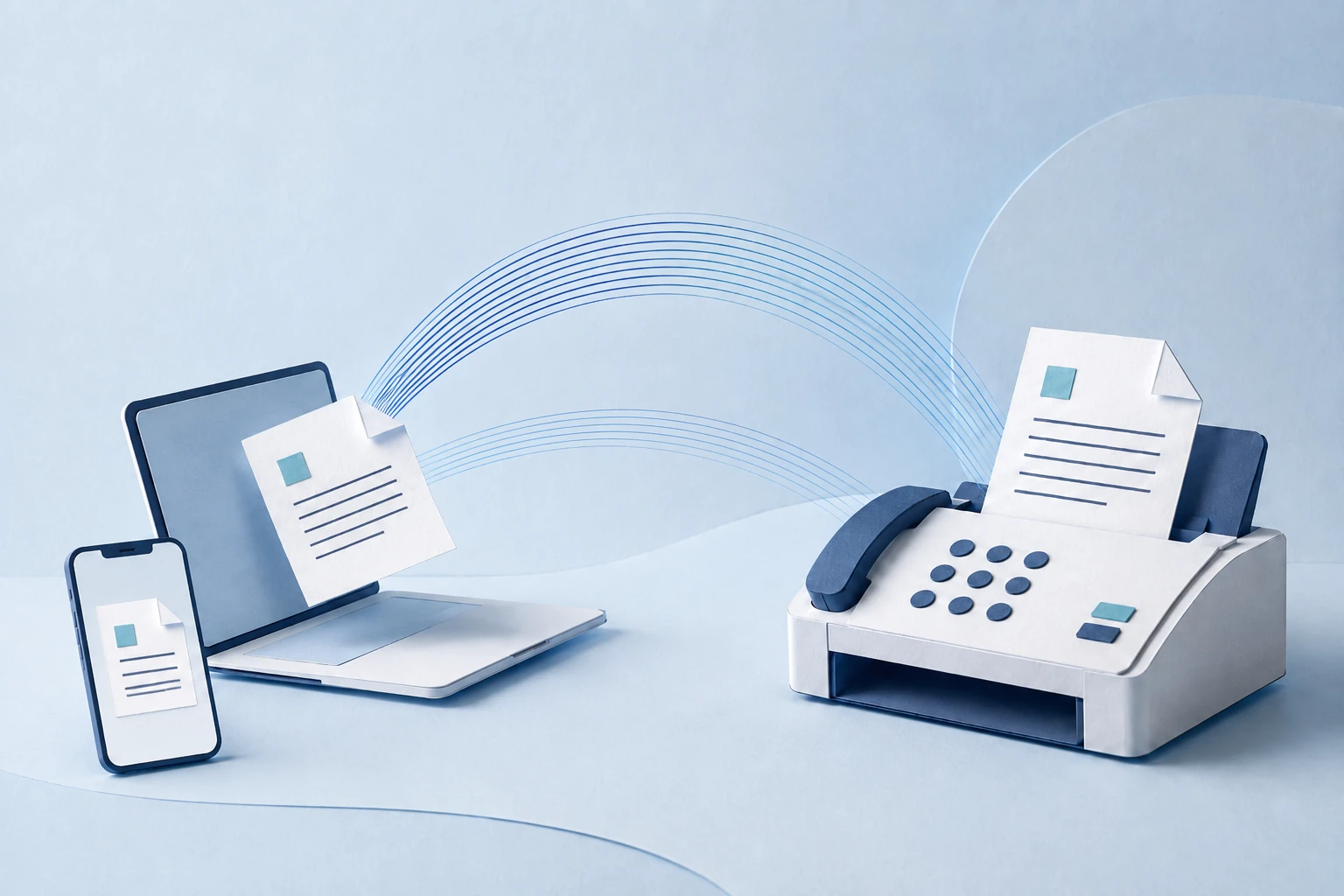
A fax machine turns your documents into electronic signals that travel through phone lines. The technology is still around despite newer digital options because it’s simple and widely accepted. When you send a check by fax, the machine:
- Scans your document, turning it into digital information
- Transmits that information through phone lines
- Reconstructs the document at the other end
Modern fax settings give you options including resolution (standard vs. fine), confirmation receipts, scheduled sending times, and cover pages. But faxing a check creates a copy rather than sending the original: the receiving fax prints a duplicate showing all the visible information, without the physical properties banks typically want for processing.
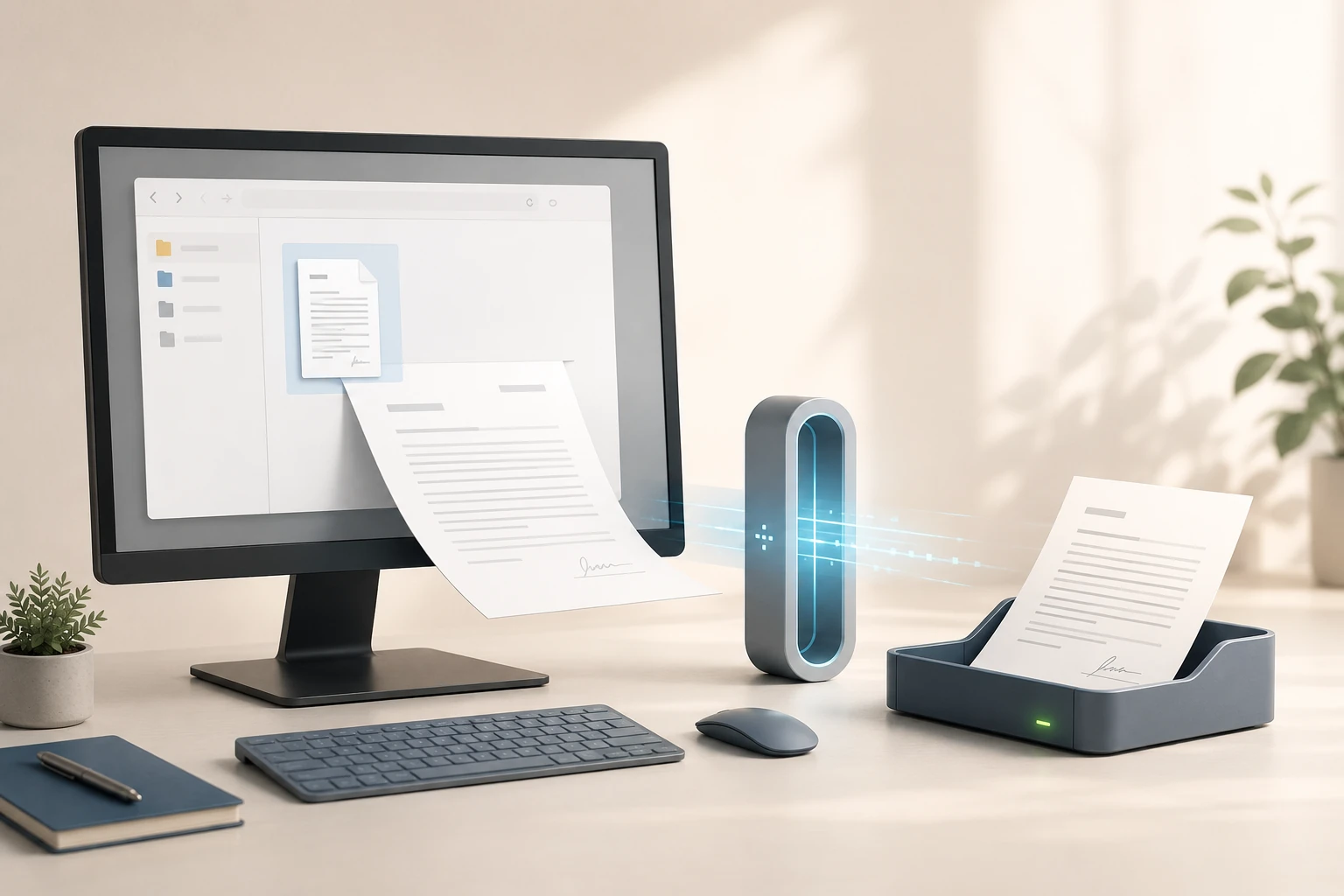
Digital fax services like Municorn Fax have modernized the process, letting you send faxes from your computer or phone without an actual fax machine. They keep the traditional fax protocol while making the whole thing far more convenient.
The Legality of Faxing Checks
Faxing checks involves legal considerations that change depending on where you are and which bank you use. Understanding both the rules and the practical side helps you make better decisions when sending payments.
Electronic Checks and Regulations
A faxed check falls under electronic check processing rules in many places. The Check 21 Act of 2004 lets banks process check images instead of original paper documents, creating a framework for electronic check processing — but it doesn’t specifically address faxed checks.
Policies differ by institution. Some banks accept faxed checks, especially for temporary processing, while others reject them over security concerns. Credit unions and smaller banks tend to be stricter than larger banks. The legal status depends on:
- The receiving bank’s internal policies
- Your local banking regulations
- What the transaction is for
Many businesses use dedicated electronic check services rather than traditional fax machines, which offer better security and clearer compliance.
Legal Considerations for Faxing Checks
A few legal factors matter when faxing a check. Copying checks to commit fraud is illegal under federal law; a faxed check isn’t automatically fraud, but how you use it matters. Whether a faxed check is accepted usually depends on the recipient — the IRS, for example, doesn’t take faxed checks for tax payments, and banks that temporarily accept one usually still want the original paper check to follow. Key considerations include:
- Signature verification — a faxed signature may not meet legal standards
- Fraud prevention — the bank needs to verify the check is real
- Original document requirements — many places require the physical check
Banks often use faxed checks to verify details rather than to process actual payments. For secure transactions, digital payment platforms generally give you stronger legal protection than a faxed check.
How to Fax a Check Safely
Faxing a check can be done securely with a little preparation. The right precautions protect your financial information while making sure the recipient can process your payment.
Preparing the Check for Faxing
Fill out the check completely
Include the date, the payee, the amount in both numbers and words, and a clear signature.
Use dark, legible ink
Black scans better than blue and stays readable after transmission, so make sure everything is easy to read.
Mark it “For Fax Transmission Only”
Write this across the front so it’s clearly not the original. Some banks also suggest adding the recipient’s fax number on the memo line for extra security.
Add a cover page
Include your contact details and the recipient’s, so the fax routes to the right department at the receiving bank.
Secure Fax Transmission Procedures
When sending a check by fax, security should be your main concern. Call the recipient beforehand to confirm they accept faxed checks and to verify their exact fax number. Use a secure fax service rather than a public machine — online fax services like Municorn Fax offer encrypted transmissions that protect your financial information in transit. A quick checklist:
- Confirm the recipient is ready to receive your fax
- Double-check the fax number before sending
- Send during business hours, when someone can receive it promptly
- Call to confirm successful receipt
Keep your transmission receipt and the original check as proof. Most banks suggest not destroying the original until the payment has been successfully processed. If you’re faxing to a bank, ask about their specific requirements, since procedures vary between institutions.