
Table of Contents
Quick answer: A fax number is a telephone number used to send and receive documents by fax rather than to make calls. It’s assigned to a fax machine or an online fax service, and it looks exactly like an ordinary phone number — a country code, an area code and a local number. When someone sends you a fax, that number is the address the document travels to.
Even with email and messaging everywhere, fax numbers are still part of daily life in healthcare, law and government — anywhere a signed, traceable document matters. Here’s what a fax number actually is, how it works, the different kinds you can have, and why it hasn’t gone away.
What is a fax number?
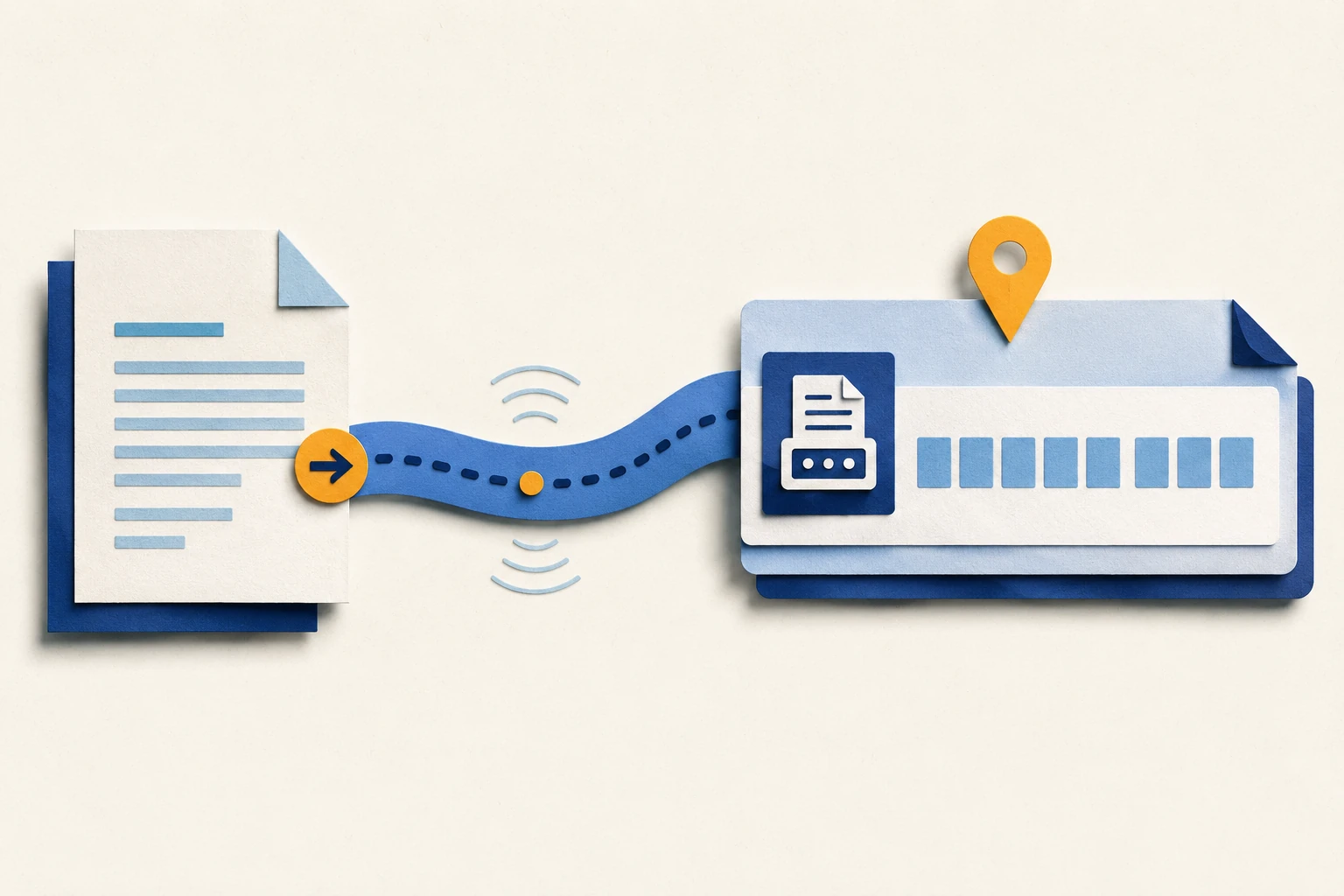
A fax number is a phone number set up to carry documents instead of voice calls. It’s tied either to a physical fax machine on a phone line, or to an online fax service that gives you a number without any hardware. In both cases the number works like an address: it tells the network exactly where to deliver the pages.
Because it runs on the same telephone system, a fax number follows the same shape as any phone number — ten digits in the US, with a country code in front for international use. If you want the exact patterns, see our guide to fax number formats and examples.
How does a fax number work?
When someone sends a fax, their machine or app dials your fax number and connects to the device at the other end. The two exchange a short burst of tones — a handshake that agrees on speed and settings — and then the document is transmitted page by page and printed or saved at the destination.
With an online fax service the number isn’t attached to a machine at all. It’s linked to your account, so incoming faxes are converted to files and delivered to your inbox or app, and outgoing ones are sent from any device — no phone line, no paper. Either way, the fax number is the fixed point everything routes through.
Types of fax numbers
Not every fax number is the same kind. Four types cover almost everything you’ll come across:
- Traditional (landline) fax numbers are tied to a physical fax machine on a phone line. The number effectively is the line, so if the machine is off or unplugged, nothing comes through. These run on the public telephone network and are still common in offices with dedicated hardware.
- Online (virtual) fax numbers aren’t attached to any machine. They live with an online fax service, so faxes arrive as files in your inbox or app and can be sent from any device. You can usually choose the area code and keep the number even if you move offices.
- Toll-free fax numbers use 800, 888, 877 or 866 prefixes, so anyone in the country can fax them without a long-distance charge — common for customer-service, claims and support lines.
- Local fax numbers carry a specific area code, giving a business a recognizable presence in a particular city or region. Online services let you pick a local number for almost anywhere, whether or not you have an office there.
Whichever type you have, the number itself looks the same — the difference is what it’s attached to and how faxes reach you. If you don’t have one yet, here’s how to get a fax number online.
Fax number vs phone number: what’s the difference?
On paper, none — a fax number and a phone number look identical and are dialed the same way. The difference is what answers. Ring a phone number and a person (or voicemail) picks up; ring a fax number and a fax machine answers with high-pitched tones, because it’s expecting a document, not a conversation. Some small offices even run voice and fax on a single shared line. If you’ve ever dialed a number and heard beeping, that’s covered in what happens when you call a fax number.
Are fax numbers secure?
Fax has long been trusted for sensitive documents, and there’s a reason for it. A fax travels point-to-point over the phone network rather than sitting on open web servers, and it leaves a clear record of what was sent and when. That combination is why healthcare and legal work still lean on it, and why fax is an accepted way to send medical records under HIPAA.
The weak points are usually physical rather than technical: a fax sent to the wrong number, or printed pages left on a shared machine for anyone to see. Online fax services close those gaps — faxes are encrypted in transit and delivered to a private, password-protected account instead of a communal tray. Municorn Fax, for instance, is HIPAA-compliant, so regulated documents stay covered from send to receipt. There’s more on this in our guide to whether online fax is secure.
Do you still need a fax number?
For a lot of people, yes — often because someone else requires it. Hospitals, clinics, law firms and government agencies still ask for faxes of medical records, contracts and forms, and many of their systems are built around it. Fax also works where internet access is patchy, and it keeps a paper trail that’s easy to produce later, so prescriptions and insurance forms are still faxed every day.
What’s changed is that you no longer need a machine or a dedicated line to have a fax number. An online service assigns you one instantly and delivers faxes to your phone or computer — here’s how to get a fax number online.
Frequently asked questions
What is a fax number in simple terms?
Is a fax number the same as a phone number?
What does a fax number look like?
Do you need a phone line or a machine to have a fax number?
Are fax numbers free?
How do I get a fax number?
How do I find my own fax number?
More on fax numbers
Find a fax number
Look up someone else’s number or read off your own, plus a directory of the most-requested ones.
Formats and examples
What a fax number looks like in every country, and how to write one correctly.
How to dial one
Sending, long-distance and international dialing — and what happens if you call a fax line.
Get your own online
Set up a fax number in minutes, with no machine or phone line.